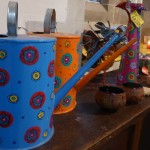
This week’s magazine entry is a photogallery of the stalls at the World Christmas Fair.
[soliloquy id=”7685″]

This week’s magazine entry is a photogallery of the stalls at the World Christmas Fair.
[soliloquy id=”7685″]
Monday to Saturday
Morning Prayer is said at 9.30 am every day in the oratory. (On some feast days this is replaced by a communion service in the chancel).
11 am every Thursday
There is a Eucharist at 11 am every Thursday morning in the chancel followed by refreshments in the synod hall.

When thinking of the American (U.S.) Thanksgiving holiday, certain iconic images come to mind: Of families gathered around dinner tables laden with roast turkey, stuffing, and pumpkin pie; parades with marching bands and giant helium balloons; (American) football matches on television; and Pilgrims in tall black hats sitting down to the first Thanksgiving feast. As important and real as these images may be, I think filmmaker John Hughes captured something of the spirit of Thanksgiving in a tug-the-heartstrings film he made in the 1980s called Planes, Trains, and Automobiles. If you’ve seen that film, you’ll remember that the plot centers on a marketing executive, played by Steve Martin, who is trying to get from New York to Chicago in order to have Thanksgiving with his family. He runs into all kinds of obstacles during the busiest travel week of the year – from snowstorms and cancelled plane flights to broken down trains, burned out rental cars, and an uncomfortable ride in the back of a long haul lorry. His constant, and unwanted, companion along the way is a large, socially clumsy, loquacious shower curtain ring salesman played by John Candy (a Canadian!). Martin’s character spends the bulk of the movie trying both to get home and to get rid of Candy’s salesman. But when Martin finally does get home for Thanksgiving, a light bulb goes off; he realizes that his erstwhile, bothersome travel companion has no home to go to, and so he invites him into his own. The movie ends with Martin’s character introducing Candy to his wife, while a Thanksgiving feast awaits them in an adjoining room.
For all its Hollywood trappings, I think director Hughes captured something important about Thanksgiving in his film. It is a time of family celebration, of eating wonderful food and enjoying activities together, but also of sharing and of welcoming others. That is the often overlooked story behind the first Thanksgiving (or one of the first – there is some debate). That took place in the village of Plymouth, Massachusetts in November 1621, when a few score English settlers, all who were left of a larger group that had sailed from England the year before, sat down to celebrate a successful harvest – a necessity for their own survival. They invited their indigenous neighbors, of the Massasoit tribe, to join them for three days of feasting and thanksgiving. Sometimes forgotten is the fact that the colonists’ own survival had depended largely upon these neighbors, who taught the starving colonists how to cultivate corn, catch fish, and locate edible plants. Their feast was a celebration and a thanksgiving, both to God and to the neighbors who had helped them survive. If their aim was to plant a ‘shining city on a hill’, as Puritan leader John Winthrop was to say a few years later, the native peoples had helped them do it. I am still struck, as I was as a child, when I see a painting imagining that first Thanksgiving: The Puritans in their black garb, tall hats, and brass buckle shoes sitting beside indigenous people with their animal skins, colorful jewelry, and hair feathers. It’s a strange and almost unimaginable combination, and that’s the wonder of it.
The English colonists were, of course, practicing an ancient tradition of giving thanks for God’s provision, which often included periods of fasting. They were to do it again two years later, and after that, many of the original colonies held annual days of thanksgiving, sometimes following upon periods of fasting. In 1789, the first U.S. President, George Washington, called upon the new nation to hold a day of thanksgiving for the successful end of the war against (You Know Who) and the ratification of the U.S. Constitution. Later presidents followed in similar suit. But it was not until 1863 that Thanksgiving became an official national holiday. Then, in the middle of the American Civil War, President Abraham Lincoln issued a declaration calling for a “day of Thanksgiving and Praise” upon which Americans could thank God for the bounty they received; “commend to his tender care” widows, orphans, and others who suffered losses in the war; and implore the Almighty to “heal the wounds of the nation.” The holiday was fixed on the fourth Thursday in November, which it remains today.
Although a lot of the original meaning, and meanings, of Thanksgiving have become clouded – popular references to ‘Turkey Day’ and presidents pardoning select members of the species, for example – the holiday is still seen as a time to reach out to others. Volunteer activities are important, and many churches and social service organizations hold food drives, deliver meals to the homebound, and host Thanksgiving dinners for the homeless and those with little means. While the needs for food and companionship certainly extend beyond the holiday itself, Thanksgiving provides some Americans with a first experience of helping others in need and (probably contrary to marketers’ intentions) highlights the discrepancies between the ‘haves’ and the ‘have nots’. Among my favorite Thanksgiving memories is a time that I took my (understandably reluctant) young children to deliver meals to some homebound persons living in social housing. Some of them identified as Christian, at least one man was Jewish, and others may have had no religious affiliation at all. That didn’t matter. But the look on their faces when they saw my children at their door is one I, and I hope they, will never forget. To my mind, Thanksgiving at its best is a shadow of that inclusive heavenly banquet where all are fed at God’s table.
* * * * * *
But back to Hollywood and popular conceptions of the holiday. The 1980s must have been a big decade for films about Thanksgiving, because Woody Allen also featured the holiday in one of his best movies from that period, Hannah and Her Sisters. You may remember the storylines which connect various characters in the film to Hannah (Mia Farrow), the center of a dysfunctional extended family that relies on her steady presence. In a narrative framed by three successive Thanksgiving gatherings in Hannah’s New York apartment, we follow the characters as they deal with existential crises including adultery, career disappointment, family divisions, and the meaning of life itself. The shared Thanksgiving meal marks the passage of time and reminds the characters (and the viewer) that, for all their failings – and they are significant – these people are a community. The annual gathering reinforces that fact and makes it real, without dismissing the issues that threaten their common identity.
So, this Thursday, 26 November, travelers across the United States will be rushing home by any means possible to sit down with their families at tables laden with turkey, cranberry sauce, and pumpkin pie; American-style football matches will be broadcast non-stop on television to millions of viewers; bands will march and play, tugging huge balloons in their wake; bleary-eyed shop workers will be preparing for the massive Black Friday rush; and the president will pardon another lucky member of the turkey race. And many people – among them, many people of faith – will be giving thanks for what they have received and sharing it with others. Whether or not the attendees of that first Thanksgiving in Massachusetts ate turkey, cranberry sauce, or pumpkin pie (and it is doubtful that they did), they left us an important image of welcome, community, and sharing. Whatever else Americans remember on this day, we should be thankful for that.
In the June 1926 edition of the St Mary’s Magazine we may read a memoir written by a member of the then congregation, the 82-year-old John Spens, recalling the worship and liturgy of “Old St Mary’s”, the Renfield Street building which housed the congregation between 1825 and the opening of the current church in 1871. He ends his recollections with the caveat
“…with regard to the services and character of the buildings of the first St Mary’s it must be remembered that during the period of its existence there were…very different standards in our Church from those now in vogue.”
Were Mr Spens to attend one of the services today, what might strike him as familiar, if anything, and what would surprise and perhaps shock him? He would no doubt have arrived at 11 a.m. expecting the service of Matins, to be followed at 12.30 by Holy Communion. He might, as a distinguished lawyer and man of great rectitude have arrived promptly, but there is much evidence that the time-keeping of St Mary’s congregation was as wayward then as now. Having settled into a seat, although almost certainly not the pew which he had rented for the exclusive use of himself and his family, he might have mused on the relatively small congregation, as in his day St Mary’s could seat nearly 1,000 people and was usually filled to capacity. Visitors, or “strangers” as they were often described, were asked to wait until the service had started, and then shown to any unoccupied seats. Upon Mr Spens’ death in 1928 his customary position was marked by the elegant, Art Nouveau memorial still to be seen on the pillar next to which he sat for nearly sixty years.
Mr Spens might be less shocked by the current text of the Eucharist than we might expect, as a century ago St Mary’s was in the lead in accepting, indeed in promoting the many changes brought about by the introduction in 1912 of the Scottish Liturgy. The congregation and vestry – Mr Spens served as a vestryman for 54 years – expressed a desire for its use within a week of its authorisation by the Province to replace the use of the 1662 English Liturgy. While a few members of the congregation found the theological implications of the revised service to be unacceptably close to the espousal of Transubstantiation and left to find refuge in St Silas’, the majority continued to appreciate the richness of the services under the leadership of the then Provost, Frederic Llewellyn Deane.
Mr Deane, an energetic young man of formidable charm and well-developed people-skills, had during his tenure (1904-1917) introduced the use of liturgical colours, Eucharistic vestments, a sanctuary lamp and established the use of candles on the High Altar. These latter were initially only placed there for the 8.30 a.m. service, and removed before the later celebration, but gradually became generally accepted. Most of these innovations were explained in the monthly magazine, which will surely have defused much dissent. The 20th century change of focus from the High altar to a Nave Altar in the crossing, would have seemed outlandish to Mr Spens, but Mr Deane might have rejoiced in this as being in line with the aims of the Parish Communion Movement of the early 20th century, in its derivation from the practices of the Early Church bringing the people into the midst of the liturgy, rather than the medievalism of the Oxford Movement which rendered them passive and for the most part silent. In the Magazine of November 1906 Mr Deane pinned his colours to this mast in declaring
“Our Church makes its appeal to Scripture and the Primitive church; and [these both] teach us emphatically that the Eucharist is the chief act of Christian worship, the only service of Divine appointment, the only Gospel service, the only service obligatory upon all Christian people on the Lord’s Day in the Primitive Church”
Musically speaking, St Mary’s was living in interesting times too. The appointment in 1904 of George Pattman as Organist was an inspired choice, as much hard work lay ahead. The tenure of his predecessor William Green Martin had come slowly to a tragic end, as he had died in post of a brain tumour from which he had been suffering – in days before sickness benefit and free health care – for eight years. He was 47 years old, and had served St Mary’s since his appointment at the age of 22.
By 1904 efforts to have St Mary’s elevated to the status of Cathedral of the Diocese of Glasgow and Galloway were well advanced, and in all sorts of ways, physical, liturgical, and musical, standards had to be raised to meet this challenge. Mr Pattman, who had been apprenticed to Dr Haydn Keeton at Peterborough Cathedral, and had in the intervening years amassed significant experience in the churches of East Yorkshire and Humberside gaining a reputation as a successful choirmaster and trainer of boys’ voices. St Mary’s choir had, since the move to the Great Western Road building been a surpliced all male choir in the English Cathedral tradition, the gentlemen paid a small stipend varying according to length of service and experience, the boys given a free education at St Mary’s School in nearby Braid Street in lieu of payment. Mr Spens, however, will have remembered the choir at Old St Mary’s as being mixed; a “cock and hen” choir in the Scottish manner, unrobed and sitting in the West Gallery beside the organ, and so he might not be too alarmed by the present constitution of the choir, although the sight of women wearing surplices would have been startling to say the least. The scarlet of the cassocks worn by today’s musicians is different from the colour worn a century ago, as in preparation for “cathedralisation” – the term used in documents of 1908 – it was decided to change from the previous, unspecified colour to “bishops’ purple”, which was worn until the 1970s.
Compared with a century, even half a century ago, the modern congregational participation in the Ordinary of the Eucharist – the Gloria, Sanctus and Benedictus – would be a complete surprise to Mr Spens. In his later years the Eucharist was Choral every other week, alternating with a Choral Matins, and the Ordinary would have been sung by the choir to elaborate settings. Apart from the use of Gounod’s Messe Sollenelle every Easter, and until 1912 every Christmas, Whitsunday (Pentecost) and Dedication Festival, Latin Masses were not used, as they are occasionally today, but the norm was settings by English composers such as Martin, Stanford and Harwood of texts from the Book of Common Prayer. At the introduction of the Scottish Liturgy Mr Pattman adapted the Harwood setting to fit the Scottish use, and this was sung at Diocesan events.
The repertoire of anthems sung today would have been quite strange to our time-travelling visitor, as a century ago, although the number of anthems used was almost as great, they were far less varied, to a great extent limited to the style of the mid-19th century, to the works of Mendelssohn, Gounod and Spohr, and their weaker imitators. In this choice Mr Pattman shows the influence of his pupil-master Dr Haydn Keeton, of whom it was said by the conductor Sir Malcolm Sargent, one of his last apprentices, that
“Music stopped at Mendelssohn for him. He absolutely thought anything after Mendelssohn was very modern indeed…and he did not like it!”
Exceptions to this genre included the use in St Mary’s of Georgian verse anthems – anthems where most of the text was sung by a group of solo voices, by Purcell, Travers and Greene, giving the gentlemen the opportunity to shine – but also the use of anthems and excerpts from oratorios featuring the solo soprano voice, most notably the virtuoso aria “Let the bright seraphim” from Handel’s Samson, testifying to Mr Pattman’s skill as a trainer of boys’ voices. Neither of these genres is much in use today. In contrast, the range of evening Canticles was more varied in style. While some dreadful old 19th century warhorses such as Tours in F and Bunnet in A were still in the repertoire, some then contemporary examples still in use today were being added to join the classic Stanford settings, such as Brewer in D, Harwood in Ab, and Noble in Bm. Indeed it has recently been proved that some of the copies in use today date from Mr Pattman’s tenure as organist.
Although to modern ears the style of psalm-singing in the early years of the 20th century might seem hopelessly uncouth, the first part of each verse gabbled through and the last three words dragged out slowly and heavily, Mr Pattman and Provost Deane would probably be delighted to hear the current practice. Nowadays the aim is to replicate the manner of an intelligent reader delivering a text in a medium sized building such as St Mary’s, and colouring the words to underline their meaning. When Mr Pattman took up the post in 1904 he found the “gabble and thump” method of psalm singing well entrenched, thanks to the use in St Mary’s of The Cathedral Psalter of 1877 which encouraged such attempts to fit the organic variety of lyrical prose into the severity of regular rhythm. In 1905 he recommended replacing this with the newly published Ripon Psalter, one of the earliest methods to foster a more natural speech rhythm, and members of the congregation were encouraged to purchase a copy for themselves, to improve their efforts to join in. in 1911 The St Mary’s Chant Book was published by Novello and Sons, comprised of a collection of favourite chants, and some composed by Mr Pattman himself. Some of these latter, notably daring for their day, have recently been restored to the Cathedral Choir’s repertoire.
In his later years Mr Pattman was to write
“[Provost Deane and I] were keen that the services [at St Mary’s] should be a pattern for what church services ought to be, and were somewhat in advance of our time in regard to speech rhythm in the Psalms.”
That is rather an understatement; our modern version of this, and the provision of a pointed text and harmonised chant the better to enable congregational participation, is still a rarity in churches where psalms are sung.
Perhaps the strongest indication of the theological, liturgical and musical differences between the St Mary’s of a century ago and the way we experience it now may be found in the early 20th century customs and practices surrounding Christmas. While nowadays Advent is a season of looking forward in expectation to the Incarnation, a hundred years ago it was a time of eschatological, apocalyptic dread as illustrated by the selection of anthems such as Remember now thy Creator by Steggall, Behold, all flesh is grass by Brahms, and In the hour of death by Kitson. There were no Carol Services as we know them now, just a few simple and mostly secular Christmas songs sung at a special children’s service on the afternoon of Christmas Eve. Christmas Day itself was a normal working day in Scotland, and the morning Eucharist, although splendid in its choice of music, had on a weekday to be timed to allow the gentlemen of the choir to “return to business” at mid-day. There would be no respite for the choir on Boxing Day, as regular daily Choral Evensong resumed on the 26th December.
It is often said that the practice of having a Watchnight Service on Hogmanay – there having been no similar Midnight Service on Christmas Eve – was to keep people out of the pub. However the choice of hymns for this service – they were always the same ones – would seem quite counterproductive in this respect. It can only be imagined how our modern congregation would respond to a service featuring such gems as
“Days and moments quickly flying/blend the living with the dead” (Hymn 289 from Hymns A&M)
Or
“A few more years shall roll,/ a few more seasons come,/ and we shall be with those/asleep within the tomb.” (A&M no 288)
A Happy New Year to you too!
When John Alexander Spens concluded his memoir of worship at Old St Mary’s with the caution that “…standards were very different from those now in vogue” he may have been justified. However, although styles may have changed through the last century, it seems that standards, in terms of a care for rich, thoughtful liturgy and a care for the best possible musical offering, were equally high then as now. When, many years later, George Pattman was asked to contribute to a posthumous biography of Frederic Llewellyn Deane, he summed up the relationship at the core of the first Golden Age thus;
“[Provost Deane’s] humanity, sympathetic understanding and wisdom made my life at St Mary’s a veritable bed of roses. Consequently I loved him and I loved the work there.”
As most church musicians would agree, this remains the Holy Grail of our profession, often sought, but rarely found.
The reports for the AGM are available here online.
Cedric and Kelvin kindly allowed me to shadow them each for a week to see how St Mary’s functions and these are some of my observations.
We all experience the beautiful music and liturgy at services and worship – but what happens behind the scenes to make this happen so seamless, and what about the day to day running of a place like St Mary’s ? My immediate impression was that it is run like any other small company and, like any other company, it has to promote itself, sell a product, and keep afloat keep financially.
St Mary’s promotes itself in its own unique way, through the style and quality of its music and preaching, and its commitment to being welcoming, open, and inclusive. St Mary’s promotes itself in other ways too, making full use of twenty-first century technologal advances. It has its own website, which is constantly updated and kept ‘fresh’, and also uses social media and networking. Doors Open days allow individuals to pop in and see the building, ask questions and, hopefully, become more interested in the ‘company’ and its product.
The St Mary’s company, like any other, has to be innovative and diverse. As well as selling its main product, it has to make full use of its premises in other ways such as hiring out the building for concerts and exhibitions. Like any other company, accounts and reports have to be prepared and produced so that ‘shareholders’ know what is happening, know how St Mary’s is performing, and are aware of plans for future developments.
Observing the workings of the ‘company’ was both interesting and informative. I saw how Jo the administrator prepares the liturgical pew sheets containing the order of service, the praise, and music. I became aware of the seasonal changes to the kyrie, eucharistic prayer, and blessing, and that settings for the Propers change once every six weeks, and the Collect changes every week. These sheets are prepared some weeks in advance and involve a lot of hard work and time.
Then there is the logistics of producing the Sunday services, something which again is no mean feat, and entails a lot of organisation. There is what is called the ‘Cast’, a list of all the participants in the performance and every member has to tick his or her name on arrival. Some of the ‘performers’ are the celebrant, the deacon, the sub-deacon, the preacher, the MC, the crucifer, the acolytes, the thurifer, the lesson reader, the intercessor, the eucharistic assistants, and the welcomers.
Beyond the Sunday services there are other numerous other activities and groups going on such as the study groups, choir practice, visiting the sick, pastoral visiting, and Faith in older people (FIOP), where an elderly person who cannot come to church regularly is visited by a member of St Mary’s. There is also the Contact Group, which organise visits to individuals with particular needs, such as hospital visits and the like.
I was allowed to sit in on meetings with Kelvin, Cedric, and Jo, where everyday issues where discussed and plans for future developments were brain -stormed. What came across was that the ‘company’ of St Mary’s realises it cannot ‘rest on its laurels’ and has to be insightful and innovative to remain successful. It also came across that everybody has his or her own interests and remit and that, although it is their responsibility to carry out that duty, there appears to be flexibility. Importantly, there is a good sense of humour, which helps the working environment and light relief when needed.
Successful companies have, among other things a good and committed ‘workforce’, and St Mary’s has an abundance of this. There are approximately one hundred and fifty volunteers helping to make this company work. The obvious ones are the choir, the stewards, the open church volunteers, the hospitality volunteers, the bell-ringers, the young church volunteers, the welcomers, the servers, and probably others whom I have missed out. I spoke to a number of individuals who volunteer at St Mary’s and have done so for many years, and the success of the company is very much due to their energy and commitment, and to the efficient way their work is managed.
Then there are the working groups of St Mary’s such as the Compliance Group dealing with health and safety; the Property Group dealing with the fabric of the building; the Finance Group dealing with money, and the Core Group dealing with future development. Like any company, St Mary’s needs money to survive, and every year there is a Stewardship campaign asking individuals to review their giving and to pay for the upkeep and maintenance of the building and its salaried personnel.
Further entrepreneurial spirit is also revealed in the rental of the parking bays at the front of the building to local businesses, and of space in the spire to a telecommunications firm where they have installed their aerial.
You have probably noticed the main product this company sells has not been mentioned so far, and this is its CEO – God! Yes, St Mary’s is like many other small companies and has to run in a business like way, but the big difference between St Mary’s and other companies is that it is not in the business of making financial profit, but in the special business of promoting and worshipping God.